Limitations of Oil/Diesel Sampling and the ISO 4406 Standard: Toward More Reliable Measurements

1.Introduction

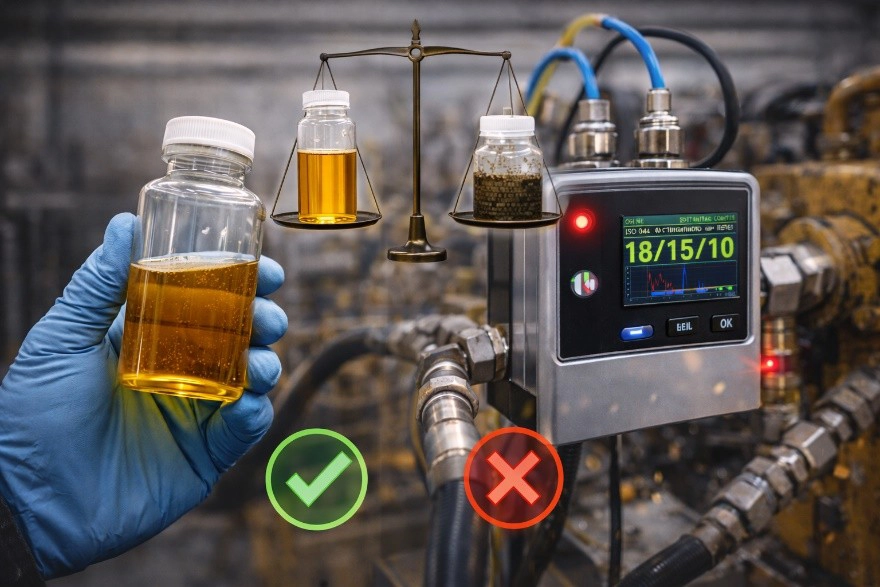
ISO 4406 is an international standard used to classify the level of solid particle contamination in fluids such as lubricating oils, hydraulic oils, and fuels, based on the particle count greater than 4 µm, 6 µm, and 14 µm per milliliter of sample (ISO, 1999).

Although laboratory sample analysis has traditionally been a common practice in predictive maintenance and lubricant condition monitoring, this method presents critical limitations when it comes to accurately measuring the true cleanliness of a fluid under real operating conditions of a machine or system—particularly in applications that demand high levels of cleanliness (Noria Corporation, 2024).

2. Fundamental Issues of
Laboratory Sampling

2.1. Cross-Contamination During Sample Collection The oil or diesel sample extracted for laboratory analysis can become contaminated during the collection, handling, or transportation process. This may occur due to:
  • Containers or bottles that are not perfectly clean, introducing their own particles into the sample. Even containers classified as “ultra-clean” may contribute enough residual particles to alter the reported ISO code (CleanControlling GmbH, 2026).
  • Improper handling or environmental exposure, such as dust, dirt, or residues originating from hands, tools, or equipment used during the extraction process.
  • Inappropriate sampling methods, such as drawing samples from sedimentation zones or from the bottom of tanks—where particles and water tend to accumulate—instead of from representative flow points of the fluid under operating conditions (MP Filtri, 2025).
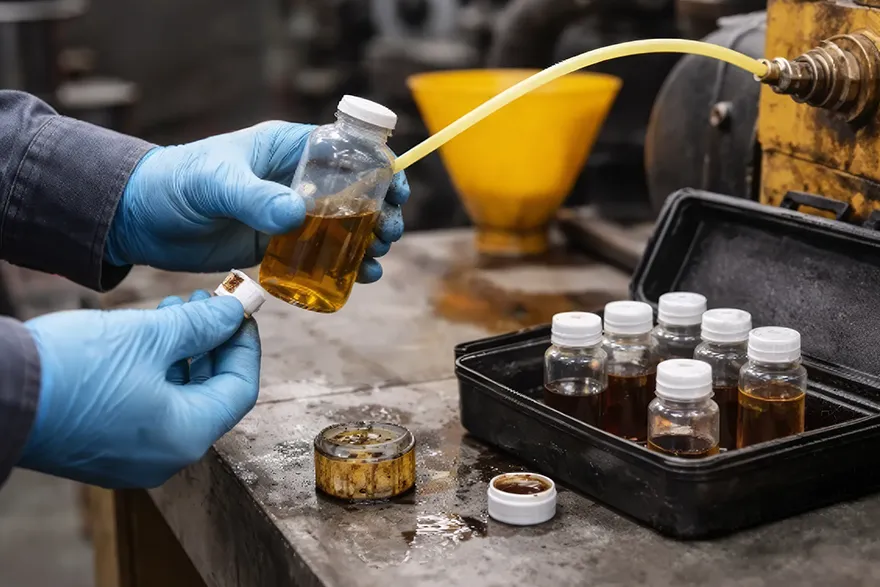
These factors can bias the results, creating a false impression that the fluid is either cleaner or more contaminated than it actually is during normal operation.

22.2. Static Nature of the Sample

Once collected, a sample represents only a static, momentary condition of the fluid. It does not capture dynamic variations that occur during actual equipment operation, such as:

  • Fluctuations in particle concentration resulting from changes in load, pressure, or temperature.
  • Generation of wear particles during start-ups, shutdowns, or transient operating conditions, which can only be observed while the equipment is in service (OilSense, 2026).

This static approach limits the predictive value of the analysis and reduces its effectiveness within modern proactive maintenance and operational reliability strategies (Johnson, 2020).

2.3. Dependencia de procedimientos estrictos

The accuracy of ISO 4406 laboratory analysis depends on standardized processes and the proper calibration of measurement instruments, such as automatic particle counters calibrated in accordance with ISO 11171 (ISO, 2017).

However, even under standardized procedures, inherent variations exist in:

  • Sample preparation, including degassing, homogenization, and bubble removal.
  • Pre-treatment processes and fluid handling.
  • Result interpretation by laboratory personnel (Entegris, 2025).

These variabilities introduce uncertainty and may reduce the true representativeness of the fluid’s actual cleanliness level.

3. How to Ensure a Sample
Is Not Contaminated

If traditional sampling is used for ISO 4406 analysis, it is essential to implement strict controls, including:

  • Use of absolutely clean equipment and containers, preferably certified in accordance with ISO 3722.
  • Installation of dedicated sampling points, located in areas of representative system flow.
  • Pre-sampling flushing to remove residual contaminants from valves and lines.
  • Trained technicians and documented procedures.
  • Transportation and handling practices that keep samples sealed and protected until analysis.

These measures reduce the risk of cross-contamination but significantly increase the time, cost, and complexity of the process (Noria Corporation, 2024).

4. Variability Between Laboratories and Methods

4.1. What They Are and How They Work

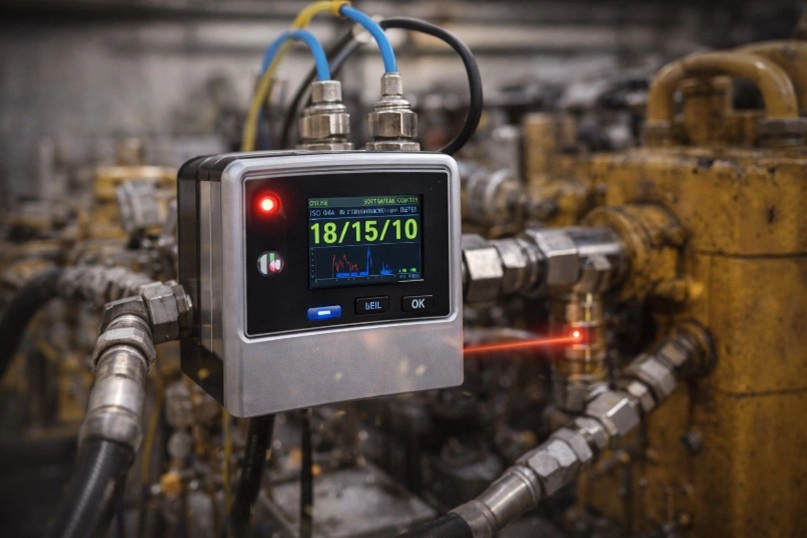
In-line laser particle counters are sensors that are directly integrated into the fluid circuit to continuously measure the quantity and size of particles present, automatically reporting the ISO 4406 code without the need to extract samples (OilSense, 2026).

These devices use optical and laser-based technology to detect particles in the flowing fluid and classify them by size in real time.
4.2. Key Advantages

Advantages:

  • True system representativeness.
  • Continuous, real-time data.
  • Reduced risk of cross-contamination.
  • Proactive maintenance capability.
  • Faster response time

Explanation:

  • Measures the fluid under real operating conditions
  • Enables immediate detection of contamination increases
  • Eliminates human handling of the fluid
  • Facilitates early detection of wear and potential failures
  • Eliminates delays associated with sample shipping and laboratory analysis

These advantages have led multiple OEMs and reliability specialists to recommend in-line measurement as the preferred practice for critical systems (MP Filtri, 2025).

4.3. Limitations and Considerations

Limitations:

  • Initial investment cost
  • Calibration and maintenance requirements.
  • Does not replace comprehensive laboratory analysis.

Details:

  • Higher initial investment compared to traditional sampling
  • Requires proper sensor management.
  • Physical-chemical and metallographic analyses are still required

Therefore, the recommended approach is the combination of in-line measurement for cleanliness control and laboratory analysis for advanced diagnostics (Entegris, 2025).

5. Recommendations According
to Experts and OEMs

Various manufacturers, reliability specialists, and technical organizations agree that:

  • Particle contamination measurement should migrate toward automated and truly representative methods, such as in-line sensors.
  • ISO 4406 is a coding standard, not a sampling standard.
  • The industrial trend is the integration of continuous monitoring with predictive analytics and asset digitalization (OilSense, 2026; Noria Corporation, 2024).

6. Why In-Line Measurement Is Technically
Far Superior to Laboratory Sampling

The primary reason why in-line ISO 4406 cleanliness measurement is vastly superior to laboratory sample extraction lies in a fundamental physical fact:

the extreme sensitivity of the ISO code to microscopic quantities of solid contamination.

When working with typical laboratory sample volumes (100 ml), only an infinitesimal mass of particles is required for the ISO code to escalate to severely contaminated levels. This condition makes traditional sampling inherently vulnerable to cross-contamination errors, even when strict procedures are followed.
6.1. Extreme Sensitivity of the ISO 4406 Code

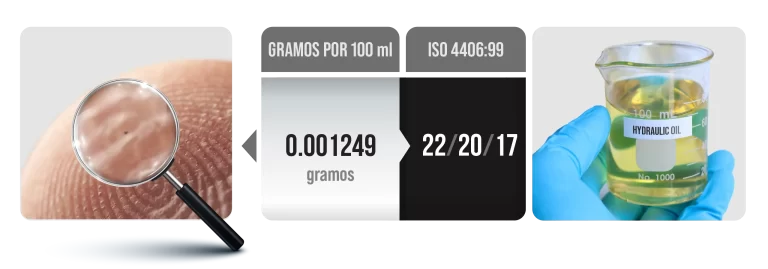
To put the magnitude of the issue into perspective, only 0.00125 grams of solid particles (1.25 milligrams) are sufficient to contaminate 100 ml of oil or diesel to an approximate level of ISO 22/21/18.

This mass is so small that it may originate from:

  • Micro-residues in a “clean” container
  • Invisible ambient dust
  • Residues in sampling valves or hoses
  • Minimal human handling

In industrial practice, achieving absolute control over these variables is nearly impossible, which makes traditional sampling an inherently fragile method when low cleanliness levels are required.
6.2. Relationship Between Contamination Mass and ISO Code Escalation

The following table illustrates how decreasing amounts of solid contamination, measured in grams for a 100 ml volume, generate complete step changes in the ISO 4406 code:

· Contamination Mass (g in 100 ml):

  · 0,00125 g

  · 0,000675 g

  · 0,0003375 g

  · 0,000168 g

  · 0,000084 g

  · 0,000042 g

· Approximate ISO Code:

  · ISO 22 / 21 / 18

  · ISO 21 / 20 / 17

  · ISO 20 / 19 / 16

  · ISO 19 / 18 / 15

  · ISO 18 / 17 / 14

  · ISO 17 / 16 / 13

Technical Note: Any minimal external contamination event during sampling is sufficient to invalidate the result.

6.3. Technical Implications for Traditional Sampling

This behavior of the ISO code has critical consequences:

  • Sampling does not fail due to poor intent; it fails due to unavoidable physical limitations.
  • The higher the required cleanliness level, the lower the reliability of sampling.
  • Errors are neither visible nor detectable to the naked eye.
  • A high ISO result may reflect contamination introduced during the sampling process, not contamination within the system itself.

For this reason, laboratory sampling cannot guarantee that the reported ISO value faithfully represents the true condition of the fluid in operation, particularly in critical systems.

6.4. Structural Advantage of In-Line Measurement

In-line measurement using laser particle counters eliminates this issue at its root because:

  • There is no sample extraction; therefore:
    • No bottles
    • No handling
    • No transportation
    • No environmental exposure
  • The fluid is measured exactly as it circulates within the system
  • The evaluated fluid volume is continuous and truly representative
  • Trends are observed, not isolated events

From a metrological standpoint, in-line measurement is not merely an improvement over sampling—it represents a paradigm shift.

6.5. Implications for Industrial Predictive Maintenance

Within predictive maintenance programs—where decisions rely on trustworthy data—in-line measurement:

  • Reduces false positives caused by sample contamination
  • Enables detection of actual wear particle generation
  • Provides early warnings based on trend analysis
  • Improves the reliability of predictive models

For these reasons, OEMs, hydraulic system manufacturers, and reliability specialists regard in-line measurement as the only technically sound approach for controlling ISO cleanliness in modern industrial applications.

7. Conclusion

Although traditional sampling and laboratory analysis under ISO 4406 have been valuable tools, they are not sufficient on their own to reliably assess fluid cleanliness in real operating systems.

Cross-contamination, the static nature of sampling, and procedural dependency limit their accuracy. The adoption of calibrated and certified in-line laser particle counters provides more representative, continuous, and actionable data—essential for advanced predictive maintenance programs.


REFERENCES

[1] CleanControlling GmbH. (2026). Particle contamination in oils and lubricants: Particle contamination analysis according to ISO 4406. CleanControlling Technical Publications.

[2] Entegris, Inc. (2025). ISO 4406 testing: Contamination particles in oil. Entegris Application Note.

[3] International Organization for Standardization. (1999). ISO 4406: Hydraulic fluid power—Fluids—Method for coding the level of contamination by solid particles. ISO.

[4] International Organization for Standardization. (2017). ISO 11171: Hydraulic fluid power—Calibration of automatic particle counters for liquids. ISO.

[5] Johnson, D. (2020). Predictive maintenance through fluid contamination monitoring. Journal of Maintenance Engineering, 8(3), 112–125.

[6] MP Filtri. (2025). Cleanliness monitoring of hydraulic systems: APCs and continuous monitoring.

MP Filtri Technical Paper.

[7] Noria Corporation. (2024). What is the importance of the ISO 4406 cleanliness code? Noria Publishing.

[7] OilSense. (2026). Condition monitoring oil sensors: Real-time oil quality monitoring. OilSense Technical Documentation.

Oil degradation due to the use of fuel outside ISO 4406 standards

Oil is a vital component in numerous machinery systems and engines, where it lubricates, cools, and protects moving parts from wear. However, oil quality can rapidly deteriorate when exposed to fuels that do not meet the cleanliness standards set by ISO 4406. This whitepaper explores the impacts of oil degradation resulting from the use of fuel outside this standard and provides recommendations to mitigate these adverse effects.

Impacts on Oil Degradation

1

Particle
Contamination

Fuels that do not comply with the ISO 4406 standard recommended by OEMs and engine manufacturers may contain elevated levels of particles and solid contaminants. When these contaminants come into contact with the lubricating oil, they can cause abrasion and premature wear on metal surfaces, reducing both oil lifespan and the service life of equipment components.

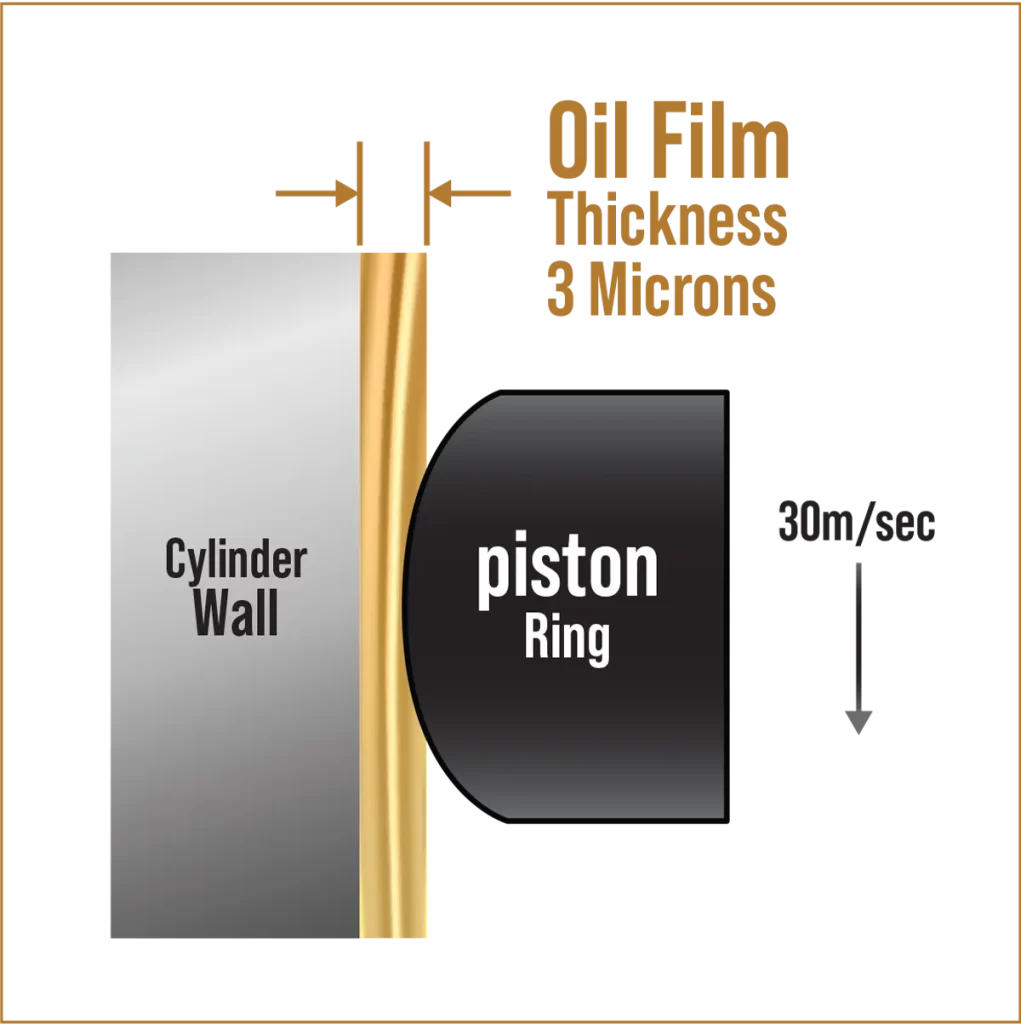
When solid particles disrupt the oil films—including boundary chemical films—friction and wear increase significantly. Research shows that between 40% and 50% of a combustion engine’s friction losses are attributable to ring/cylinder contacts, with two-thirds of those losses occurring at the top compression ring. Studies have even documented an extremely high level of sensitivity in the piston ring-to-cylinder area to contaminants carried by oil and air. Therefore, abrasive wear in the ring/cylinder area directly leads to increased friction, air leakage, compression losses, and a reduction in fuel efficiency.

2

Combustion
Efficiency Losses

Sooner or later, wear caused by abrasive particles, carbon deposits, and insoluble oxides will interfere with efficient combustion in an engine. Wear in the valve train (cams, valve guides, etc.) can affect valve timing and movement. Wear in rings, pistons, and liners influences volumetric compression efficiency and combustion quality, ultimately resulting in power loss.

In diesel engines, a surprising number of laboratory and field studies highlight the critical importance of controlling particles below ten microns. One such study conducted by GM concluded that “particle control in the 3 to 10 micron range had the greatest impact on wear rates, and that engine wear rates correlated directly with dust concentration levels in the crankcase”.1

COMPONENT OIL FILM THICKNESS (microns)
Ring to cylinder 3.0 - 7
Connecting rod bearings 0.5 - 20
Crankshaft bearings 0.8 - 50
Turbocharger bearings 0.5 - 20
Piston pin bushing 0.5 - 15
Valve train 0 - 1.0
Gears 0 - 1.5

A study on bus engine fuel consumption by G. Andrews et al. from the University of Leeds provides further evidence of the benefits of cleaner oil for fuel economy in a real-world road test. The study observed that fuel efficiency in a Cummins engine improved by 2 to 3 percent when a six-micron bypass filter was used alongside a full-flow filter. The study covered 50,000 miles of service, and fuel consumption was calculated based on detailed fleet refueling records.


BUS 4063
L/1000 miles
BUS 4070
L/1000 miles

Full-flow filter

720

683

Full-flow filtration plus 6-micron bypass filter

699

670

Fuel savings

2.92%

1.90%
Cummins 6-cylinder, 8.3-liter turbocharged engine 50,000 miles of service

3

Sludge and
Varnish Formation

The presence of impurities in fuel can accelerate the formation of sludge and varnish in the oil. These byproducts of oil degradation can clog filters, reduce the efficiency of the lubrication system, and increase friction between moving parts—leading to greater wear and decreased equipment performance.

Deposits in the combustion chamber and valve area can restrict ring movement and valve control. When hard particle contamination combines with soot and sludge to form sticky deposits between valves and guides, it creates stubborn interference known as “stiction.” This results in power loss and alters the timing of port opening and closing, causing incomplete combustion and posing a risk of knocking or detonation. In advanced stages, this problem can lead to valve seat burning.

4

Increased Oxidation
and Viscosity

 Exposure to contaminated fuels can accelerate the oxidation of lubricating oil, leading to increased viscosity and the formation of corrosive acids. This accelerated oxidation reduces the oil’s ability to properly lubricate equipment components, potentially resulting in poor performance and higher fuel consumption.

The internal fluid friction associated with increased viscosity not only raises fuel consumption, but also generates additional heat, which can cause premature additive breakdown and oxidation of the base oil.

5

Reduced Oil
Change Intervals

Accelerated oil degradation caused by the use of fuel that does not meet ISO 4406 standards—recommended by OEMs and engine manufacturers—may require more frequent oil changes to maintain performance and protect equipment integrity. This not only increases operating and maintenance costs, but also generates larger volumes of used oil that must be properly managed. Some researchers believe that soot and dust particles exhibit polar absorbencies and, as such, may block AW (anti-wear) additives, reducing their effectiveness in controlling friction in boundary contacts (e.g., cam lobe tips, ring/liner interfaces).

6

Power Loss
Due to Engine Wear

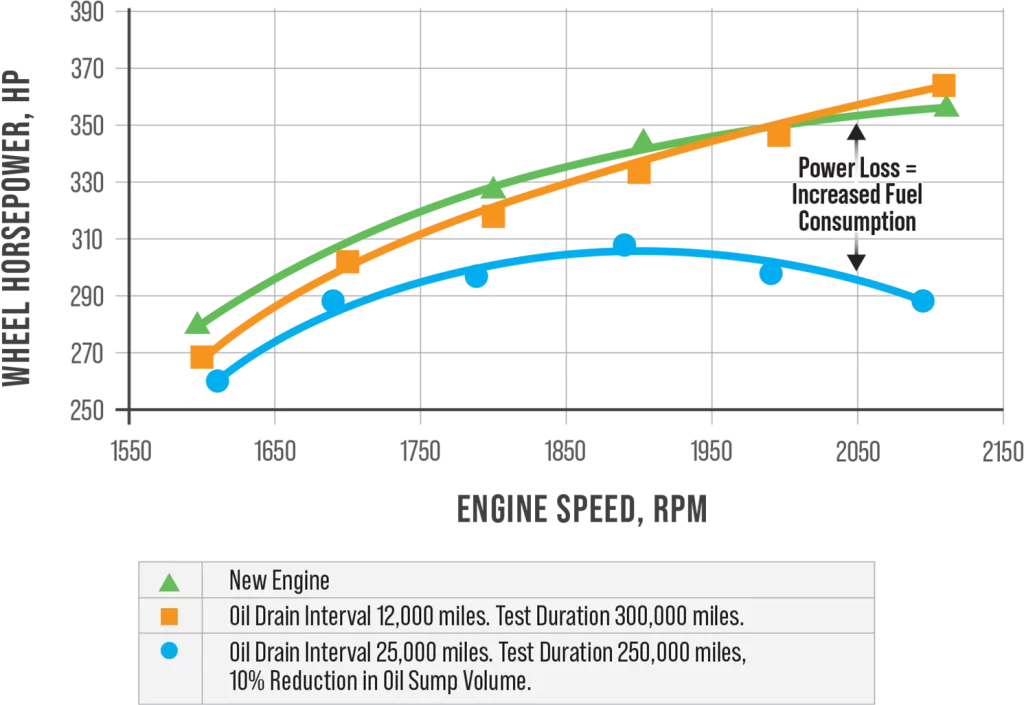
The figure below illustrates how increased engine wear—caused in this case by excessively extended oil drain intervals—contributes to power loss (engine horsepower). At 2100 rpm, with the engine severely worn, wheel horsepower dropped from 365 HP to under 300 HP—an 18 percent loss. This loss in power translates directly into reduced fuel economy.

7

Exhaust
Emissions

When an engine begins to consume oil—mainly due to wear caused by contaminants—the oil enters the combustion chamber, burns along with the fuel, and is expelled through the exhaust as particulate matter and volatile hydrocarbons.

Over time, the level of exhaust emissions increases significantly due to engine wear and deposit formation in the combustion area. This leads not only to a higher concentration of particulate emissions, but also to a greater percentage of unburned hydrocarbons—a direct byproduct of oil consumption.

Conclusion

The use of fuel that does not meet the ISO 4406 cleanliness limits established by OEMs and engine manufacturers can have serious consequences for the degradation of lubricating oil, including the formation of solid contaminants, sludge, varnish, oxidation, and increased viscosity. These effects can lead to poor equipment performance, accelerated component wear, and higher maintenance costs.

To mitigate these impacts, it is essential for OEMs, end users, and fuel suppliers to work collaboratively to ensure compliance with fuel cleanliness standards and lubricating oil quality requirements.

All engine manufacturers worldwide specify optimal and maximum allowable levels of solid particle contamination and water content in fuel as necessary conditions for reliable engine operation within specified parameters. This requirement is not limited to the latest generation engines—although they are the most negatively affected when fuel cleanliness requirements, as defined by international standard ISO 4406:21, are not met.”

How Fuel Quality Helps Prevent Premature Compression Loss

Loss of compression in engines: what causes it?

Premature compression loss in internal combustion engines is a critical issue that significantly affects engine performance, efficiency, and service life. This phenomenon can be attributed to a variety of factors, among which the type of fuel used plays a key role. Below, we will examine the relationship between fuel and premature compression loss, highlighting the importance of selecting the appropriate fuel to ensure engine health and optimal performance.

What Is Premature Compression Loss?

Premature compression loss refers to the abnormal decrease in compression pressure within an engine’s combustion chambers. This condition can be caused by several factors, including wear of piston rings, valves, or cylinder walls, as well as the buildup of carbon deposits or the degradation of seals and gaskets. When compression loss occurs, engine efficiency is reduced—leading to decreased power output, increased fuel consumption, and a higher risk of mechanical failures.

The role of fuel in premature
compression loss

The type of fuel used in an internal combustion engine can have a significant impact on the onset and severity of premature compression loss. Low-quality fuels, particularly those with high levels of impurities or undesirable additives, can contribute to the accelerated wear of engine components. Conversely, high-quality fuels—with proper formulation and controlled composition—can help minimize deposit formation, reduce friction, and extend engine lifespan.

The Importance of Choosing the Right Fuel

Selecting the appropriate fuel is essential for preventing premature compression loss and ensuring long-term engine performance. By choosing a high-quality fuel, diesel engine operators can benefit in several key ways:

  • Reduced wear of engine components: Premium fuels help reduce deposit buildup and minimize friction between moving parts, thereby extending component life.

  • Improved efficiency and performance: Clean, high-grade fuels support more complete and uniform combustion, resulting in greater power output and improved fuel economy.

  • Lower pollutant emissions: Because they burn more efficiently, quality fuels produce fewer harmful emissions, contributing to reduced air pollution and a cleaner environment.

The use of on-spec fuel not only contributes to extending the service life of the engine and its components such as injectors, DPF, service filters, and even the lubricant but also significantly improves fuel consumption efficiency, potentially reducing fuel usage by up to 17%.

The Effective
Filtration Solution

It is well established by OEMs that an ISO cleanliness level of 11/8/7 is optimal at the injector; therefore, it is essential to have filtration systems capable of ensuring this level of cleanliness.

A filter with a Beta 4>4000 efficiency rating is appropriate for markets where fuel cleanliness levels exceed ISO 21/20/17. It is always crucial that the filter is properly sized for the expected flow rate and that filtration systems are implemented from the point of fuel reception to the dispensing nozzles for operations consuming more than 500,000 gallons annually.

Note: For annual consumption below 500,000 gallons, point-of-use systems (at the nozzle) can be used.
Note: Always account for water and emulsion control—using SAE J1488-certified coalescers for high-volume operations or absorbents for consumption below 200,000 gallons annually.
Note: Bypass filtration of engine oil is highly recommended to maintain lubricant cleanliness below ISO 18/16/13.

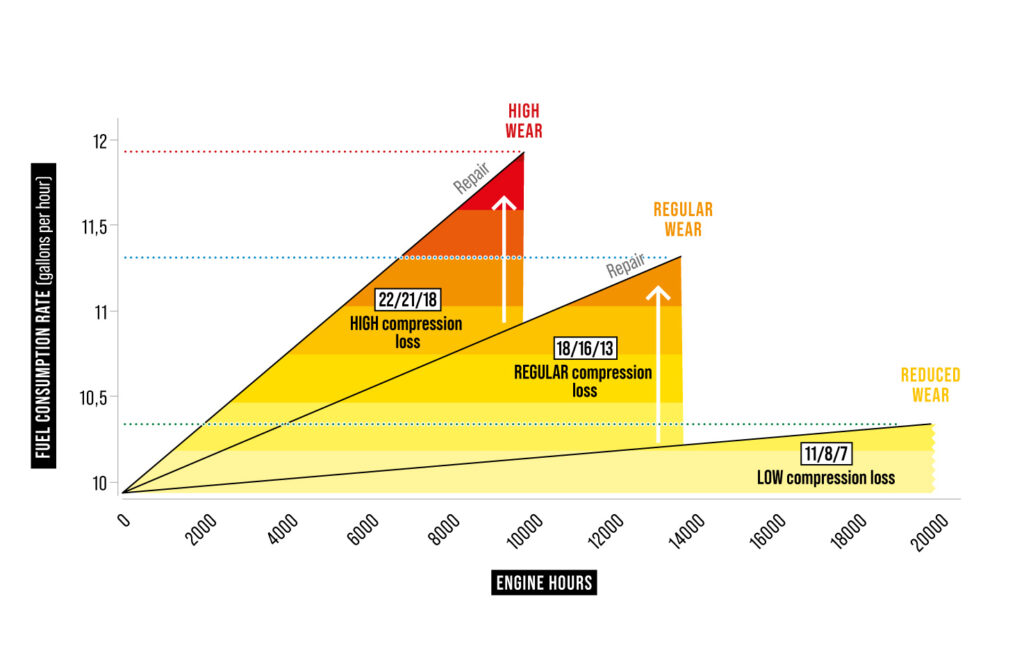
This chart clearly illustrates the difference in engine lifespan extension and fuel consumption reduction when using fuel with a cleanliness level that meets OEM recommendations, compared to the fuel currently supplied to equipment in many Latin American countries.

Conclusion

Premature compression loss is a common issue in internal combustion engines but can be mitigated through the selection of appropriate fuel. Choosing high-quality fuels and avoiding low-quality or questionable sources is essential to maintaining engine health and optimal performance over time.

By prioritizing fuel quality, operators can benefit from more efficient, powerful, and durable engines while also contributing to environmental protection by reducing pollutant emissions.

Bypass Filtration of Lubricating Oil in Engines

Diesel: Technical and Economic Benefits
for Industrial Operations

Currently, companies that rely on diesel engines—such as shrimp farms, transportation providers, and various industrial sectors—face ongoing challenges in maintaining their fleets. Engine wear, high maintenance costs, and the constant need to optimize performance are just a few of the issues impacting both operational efficiency and profitability.

In this context, bypass filtration emerges as an innovative solution that not only extends engine life but also improves performance and significantly reduces operating costs. This whitepaper explores the fundamental principles of bypass filtration, its technical and economic benefits, and how it can transform the operation of your diesel engine fleet.

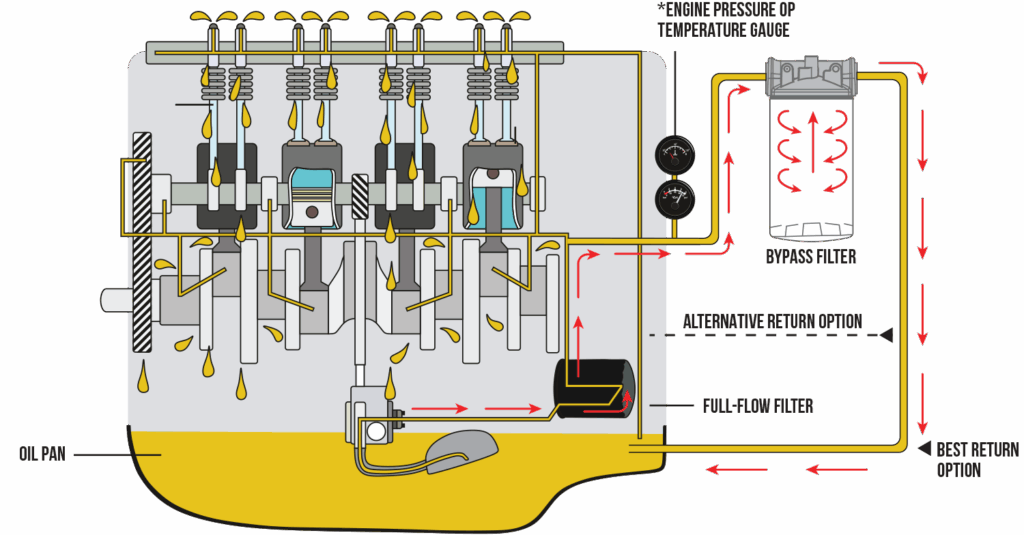
According to Noria Corporation, high levels of contamination in engine lubricating oils prevent the use of filters with very fine pores in full-flow systems, as these would lead to premature clogging. To address this issue, bypass filters are recommended. These filters divert only 5% to 10% of the engine’s lubrication flow through an ultra-high-efficiency filter before returning the cleaned oil directly to the sump.

With bypass filtration, the flow rate is significantly reduced, allowing for much smaller pore sizes while maintaining a normal pressure differential. The result is significantly cleaner oil returning to the oil reservoir.

This approach enables the removal of finer soot suspensions and polar insolubles that are not effectively controlled by the full-flow filter. When used in combination with a full-flow filter, bypass filtration delivers key advantages, including lower wear particle generation rates, reduced oil consumption, improved combustion efficiency, and extended oil service life.

In a case study conducted by General Motors and published by the Society of Automotive Engineers (SAE), it was found that engine life could be extended by a factor of eight when using 5-micron bypass filters, compared to standard 40-micron filtration systems.

1

Basic Principles of
Bypass Filtration

Bypass filtration is an advanced technology that enhances engine oil quality without compromising the main lubricant flow. Unlike traditional systems, which primarily filter out larger particles, bypass filtration systems remove microscopic contaminants that are responsible for long-term engine component wear.

  • Basic Operation: In a bypass system, a small portion of the engine oil is diverted to a secondary filter, where finer particles and other contaminants—typically missed by conventional full-flow filters—are effectively removed. This process keeps the oil cleaner for a longer period, reducing wear and improving engine efficiency.
  • Key Benefit: The engine operates with higher-quality oil for extended periods, which reduces internal friction and prevents damage to critical components such as pistons, valves, and bearings.

2

Technical Benefits of
Bypass Filtration

a) Extended Engine Life: The primary technical benefit of bypass filtration is the extension of engine service life. By removing microscopic particles that cause wear, the engine maintains optimal performance for significantly longer periods, delaying costly repairs and component replacements.

b) Reduced Maintenance Costs: Bypass systems prevent the buildup of sludge and deposits inside the engine, reducing the need for frequent maintenance. With fewer harmful particles in the oil, blockages and mechanical failures are minimized, lowering downtime and repair costs.

c) Improved Operational Efficiency: A clean engine is an efficient engine. Bypass filtration enhances operational efficiency by ensuring the engine runs at more stable temperatures and with reduced internal friction. This not only boosts overall performance but also contributes to improved fuel economy.

d) Reduced Emissions: By improving engine efficiency, bypass filtration also helps reduce emissions. An engine free from contaminants produces fewer exhaust gases, aiding companies in complying with stricter environmental regulations and improving sustainability efforts.

In the document Impact of particulate matter and fuel quality on the life of diesel engines and the environment – Part 2, written by Engineer Gerardo Trujillo, the following is stated:
“Maximum solid contamination levels should be ISO 18/16/13 (lower is better), in accordance with the international ISO 4406 standard. To achieve these cleanliness levels, fleet maintenance strategies must include careful management of air filters, proper oil application procedures, and fuel cleanliness. The solid particles that destroy engines typically enter through the air intake system (pre-filters, primary and secondary filters), which must be handled with care. Common practices such as blowing out filters with compressed air or washing them to reuse after saturation should be avoided.

New lubricants must be filtered before being introduced into the engine, and engine oil filters must be efficient enough to achieve and sustain ISO 18/16/13 levels. Supplemental filtration options, such as bypass filters connected to the engine’s oil pressure line—either high-efficiency synthetic media filters or centrifugal systems—are capable of removing particles down to 1 micron, including agglomerated soot. This allows for even higher cleanliness levels and extends both oil and engine filter life. Furthermore, fuel and intake air cleanliness are critical to preventing combustion byproducts from contaminating the oil and causing abrasive wear.”

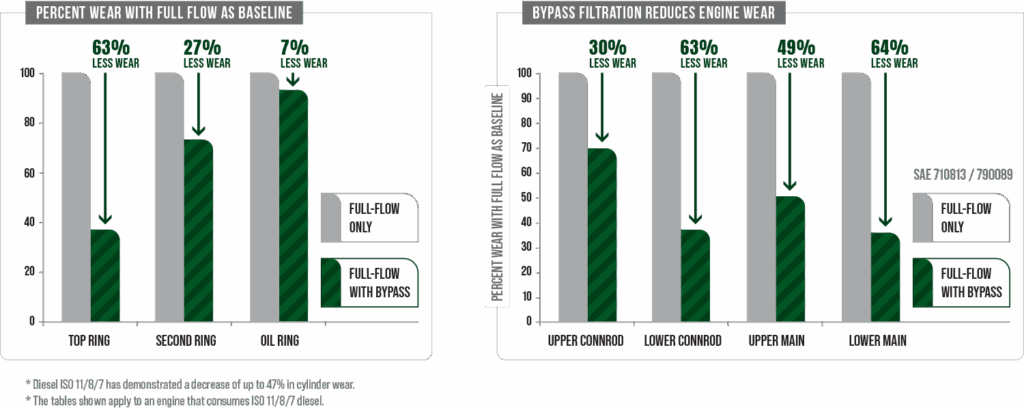
It has also been demonstrated that when using fuel that meets ISO cleanliness code (11/8/7) and implementing a bypass filter, the following results can be achieved:

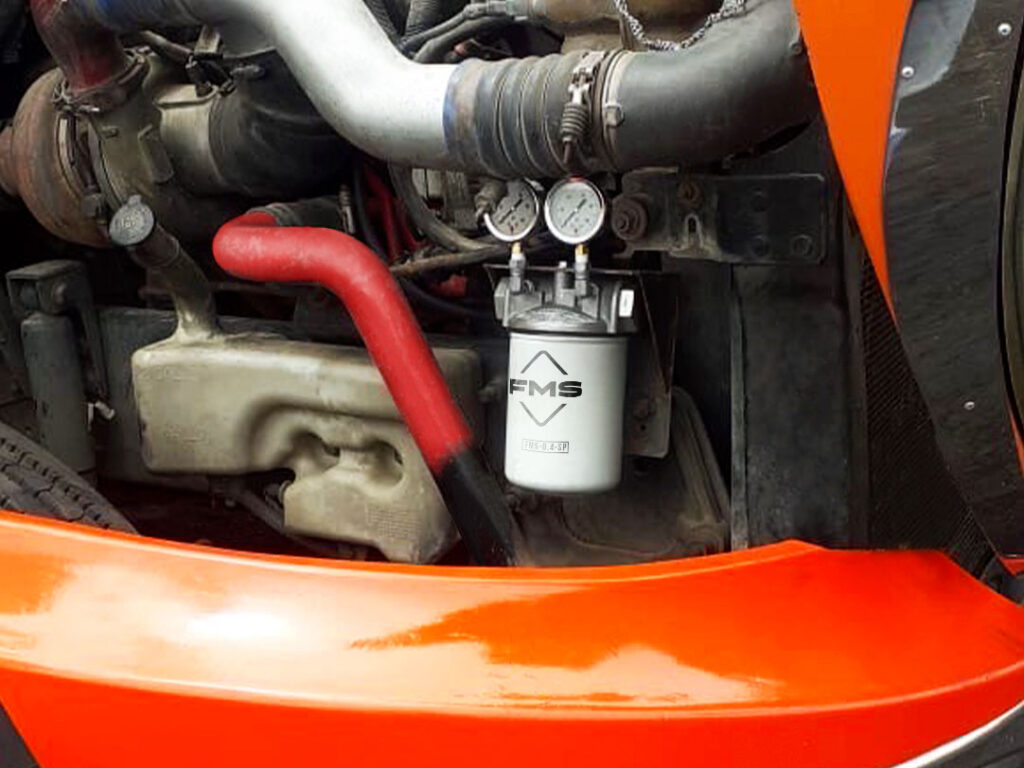
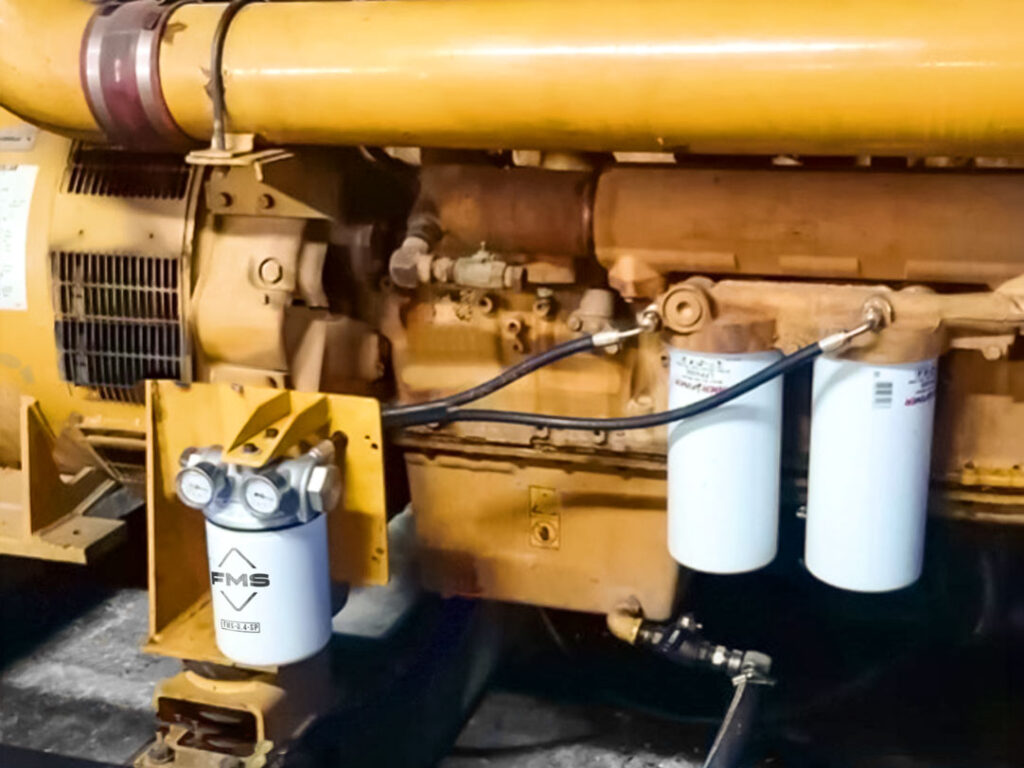
The FMS bypass oil filtration system ensures that the oil in the sump is continuously cleaned while the engine is running, achieving the optimal cleanliness target recommended by engine manufacturers (ISO 16/14/12 or better). As a result, engine oil performance will exceed expectations.

3

Economic Benefits of
Bypass Filtration

a) Reduced Oil Consumption: Bypass filtration extends the service life of engine oil, reducing the frequency of oil changes. This not only lowers oil procurement costs but also minimizes waste and the need for disposal of contaminated oil, contributing to more cost-effective and environmentally friendly operations.

b) Lower Operating Costs: Thanks to its ability to reduce engine wear and mechanical failures, bypass filtration systems significantly lower overall operating costs. Engines require less maintenance and fewer replacement parts, resulting in reduced downtime and increased productive operating hours.

c) Sustainable Return on Investment (ROI): The initial investment in a bypass filtration system is quickly recovered through savings in fuel, oil, repairs, and components. Businesses can expect a strong long-term ROI driven by lower operating costs and improved engine reliability.

d) Extended Fleet Service Life: By implementing bypass filtration, diesel engine fleets can operate longer without the need for costly replacements or major overhauls. This extends asset longevity and enhances long-term profitability.

4

Applications

Vehicular, stationary, and generation.

5

Implementation and
Recommendations

a) Simple and Efficient Installation: Bypass filtration systems are easy to install and do not require complex modifications to existing diesel engines. The installation is performed quickly and efficiently, minimizing equipment downtime.

b) Minimal Maintenance: Once installed, the system requires minimal maintenance. Bypass filters are low-cost and easily accessible, making replacement straightforward without interrupting daily operations.

c) Implementation Process:

Initial Assessment: Analyze your needs and determine the appropriate system.

Quick Installation: Implementation without operational interruptions.

Monitoring and Optimization: Ensure regular inspections are conducted to maximize performance.

Conclusion

Bypass filtration is much more than just an improvement in engine maintenance technology. It is a strategic solution that provides significant technical and economic benefits for any business relying on diesel engines. From extending engine life to reducing operational costs, bypass filtration ensures more efficient, cost-effective, and environmentally friendly operations.