Oil is a vital component in numerous machinery systems and engines, where it lubricates, cools, and protects moving parts from wear. However, oil quality can rapidly deteriorate when exposed to fuels that do not meet the cleanliness standards set by ISO 4406. This whitepaper explores the impacts of oil degradation resulting from the use of fuel outside this standard and provides recommendations to mitigate these adverse effects.
Impacts on Oil Degradation
1
Particle
Contamination
Fuels that do not comply with the ISO 4406 standard recommended by OEMs and engine manufacturers may contain elevated levels of particles and solid contaminants. When these contaminants come into contact with the lubricating oil, they can cause abrasion and premature wear on metal surfaces, reducing both oil lifespan and the service life of equipment components.
When solid particles disrupt the oil films—including boundary chemical films—friction and wear increase significantly. Research shows that between 40% and 50% of a combustion engine’s friction losses are attributable to ring/cylinder contacts, with two-thirds of those losses occurring at the top compression ring. Studies have even documented an extremely high level of sensitivity in the piston ring-to-cylinder area to contaminants carried by oil and air. Therefore, abrasive wear in the ring/cylinder area directly leads to increased friction, air leakage, compression losses, and a reduction in fuel efficiency.
2
Combustion
Efficiency Losses
Sooner or later, wear caused by abrasive particles, carbon deposits, and insoluble oxides will interfere with efficient combustion in an engine. Wear in the valve train (cams, valve guides, etc.) can affect valve timing and movement. Wear in rings, pistons, and liners influences volumetric compression efficiency and combustion quality, ultimately resulting in power loss.
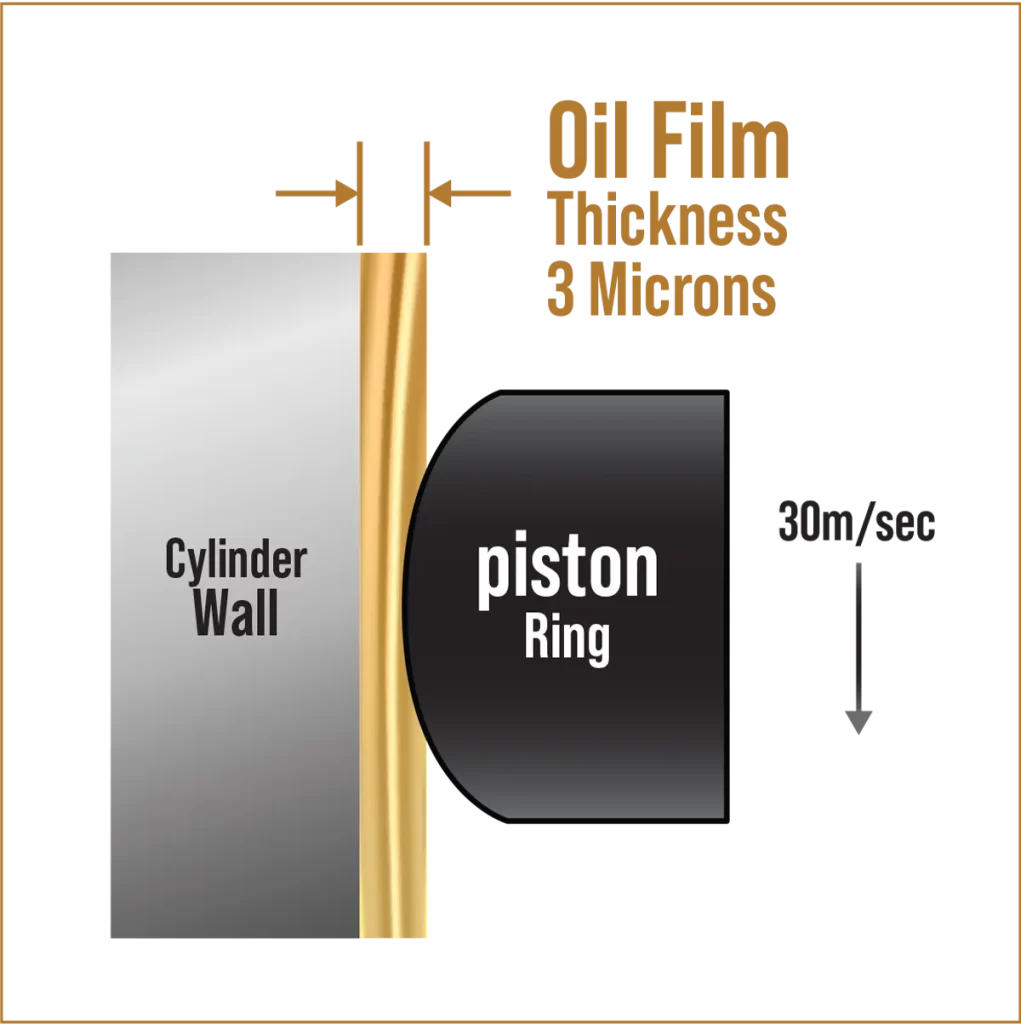
In diesel engines, a surprising number of laboratory and field studies highlight the critical importance of controlling particles below ten microns. One such study conducted by GM concluded that “particle control in the 3 to 10 micron range had the greatest impact on wear rates, and that engine wear rates correlated directly with dust concentration levels in the crankcase”.1
| COMPONENT | OIL FILM THICKNESS (microns) |
|---|---|
| Ring to cylinder | 3.0 - 7 |
| Connecting rod bearings | 0.5 - 20 |
| Crankshaft bearings | 0.8 - 50 |
| Turbocharger bearings | 0.5 - 20 |
| Piston pin bushing | 0.5 - 15 |
| Valve train | 0 - 1.0 |
| Gears | 0 - 1.5 |
A study on bus engine fuel consumption by G. Andrews et al. from the University of Leeds provides further evidence of the benefits of cleaner oil for fuel economy in a real-world road test. The study observed that fuel efficiency in a Cummins engine improved by 2 to 3 percent when a six-micron bypass filter was used alongside a full-flow filter. The study covered 50,000 miles of service, and fuel consumption was calculated based on detailed fleet refueling records.
| BUS 4063 L/1000 miles |
BUS 4070 L/1000 miles |
|
|---|---|---|
|
Full-flow filter |
720 |
683 |
|
Full-flow filtration plus 6-micron bypass filter |
699 |
670 |
|
Fuel savings |
2.92% |
1.90% |
3
Sludge and
Varnish Formation
The presence of impurities in fuel can accelerate the formation of sludge and varnish in the oil. These byproducts of oil degradation can clog filters, reduce the efficiency of the lubrication system, and increase friction between moving parts—leading to greater wear and decreased equipment performance.
Deposits in the combustion chamber and valve area can restrict ring movement and valve control. When hard particle contamination combines with soot and sludge to form sticky deposits between valves and guides, it creates stubborn interference known as “stiction.” This results in power loss and alters the timing of port opening and closing, causing incomplete combustion and posing a risk of knocking or detonation. In advanced stages, this problem can lead to valve seat burning.
4
Increased Oxidation
and Viscosity
Exposure to contaminated fuels can accelerate the oxidation of lubricating oil, leading to increased viscosity and the formation of corrosive acids. This accelerated oxidation reduces the oil’s ability to properly lubricate equipment components, potentially resulting in poor performance and higher fuel consumption.
The internal fluid friction associated with increased viscosity not only raises fuel consumption, but also generates additional heat, which can cause premature additive breakdown and oxidation of the base oil.
5
Reduced Oil
Change Intervals
Accelerated oil degradation caused by the use of fuel that does not meet ISO 4406 standards—recommended by OEMs and engine manufacturers—may require more frequent oil changes to maintain performance and protect equipment integrity. This not only increases operating and maintenance costs, but also generates larger volumes of used oil that must be properly managed. Some researchers believe that soot and dust particles exhibit polar absorbencies and, as such, may block AW (anti-wear) additives, reducing their effectiveness in controlling friction in boundary contacts (e.g., cam lobe tips, ring/liner interfaces).
6
Power Loss
Due to Engine Wear
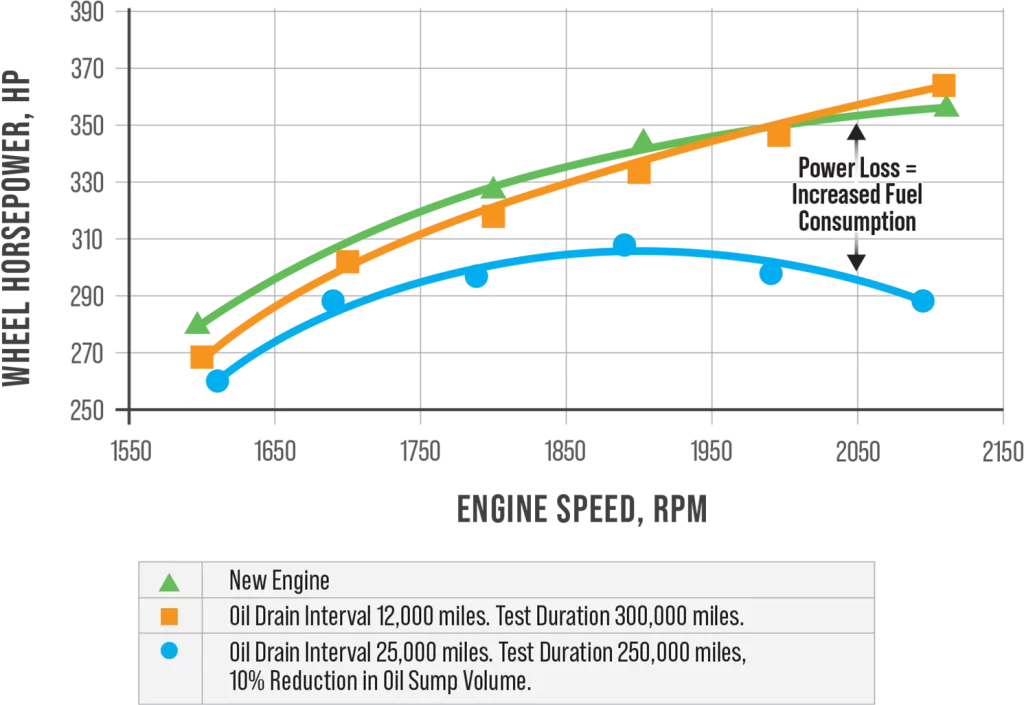
The figure below illustrates how increased engine wear—caused in this case by excessively extended oil drain intervals—contributes to power loss (engine horsepower). At 2100 rpm, with the engine severely worn, wheel horsepower dropped from 365 HP to under 300 HP—an 18 percent loss. This loss in power translates directly into reduced fuel economy.
7
Exhaust
Emissions
When an engine begins to consume oil—mainly due to wear caused by contaminants—the oil enters the combustion chamber, burns along with the fuel, and is expelled through the exhaust as particulate matter and volatile hydrocarbons.
Over time, the level of exhaust emissions increases significantly due to engine wear and deposit formation in the combustion area. This leads not only to a higher concentration of particulate emissions, but also to a greater percentage of unburned hydrocarbons—a direct byproduct of oil consumption.
Conclusion
The use of fuel that does not meet the ISO 4406 cleanliness limits established by OEMs and engine manufacturers can have serious consequences for the degradation of lubricating oil, including the formation of solid contaminants, sludge, varnish, oxidation, and increased viscosity. These effects can lead to poor equipment performance, accelerated component wear, and higher maintenance costs.
To mitigate these impacts, it is essential for OEMs, end users, and fuel suppliers to work collaboratively to ensure compliance with fuel cleanliness standards and lubricating oil quality requirements.
All engine manufacturers worldwide specify optimal and maximum allowable levels of solid particle contamination and water content in fuel as necessary conditions for reliable engine operation within specified parameters. This requirement is not limited to the latest generation engines—although they are the most negatively affected when fuel cleanliness requirements, as defined by international standard ISO 4406:21, are not met.”
NORIA CORPORATE