

Regulatory, technical, and economic barriers behind
the lack of enforcement of this international standard.
INTRODUCTION
Although ISO 4406:2017—an international standard used to measure the cleanliness of diesel fuel and lubricating fluids through particle counting—is recognized by engine manufacturers and international organizations as a key tool for ensuring the service life of engines and sensitive systems, Latin America has not explicitly incorporated it into national regulations governing fuel and lubricant quality.
Instead, Latin American countries rely on specifications traditionally based on methods such as ASTM D975 for diesel and API/ACEA standards for oils, which do not measure or require solid particle levels by size in the way ISO 4406 does.
This document explores the possible causes behind this regulatory absence, based on institutional factors, technical capabilities, economic priorities, sectoral interests, and the historical evolution of fuel quality standards in the region.
1. What is ISO 4406 and what does it measure?
The ISO 4406 standard does not directly regulate fuels or lubricants; rather, it is a method for coding the number of solid particles present per unit volume, classified by sizes greater than 4 µm, 6 µm, and 14 µm. This makes it possible to quantify solid contamination in fuels or fluids and establish cleanliness targets.
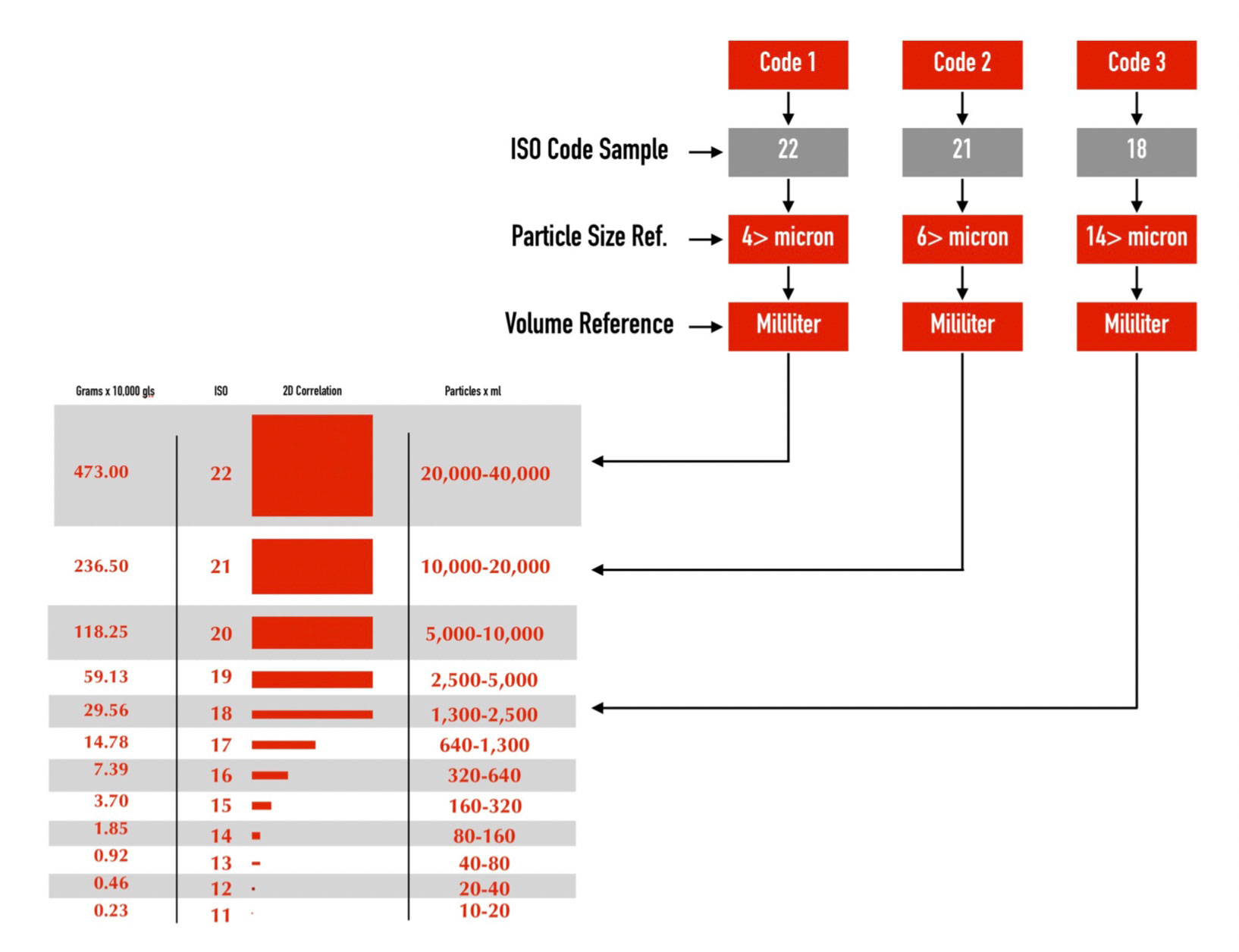
ISO 4406 is relevant for:
- Modern diesel engines with high-pressure injection systems, where small particles can cause failures in injectors and pumps.
- Sensitive hydraulic and lubrication systems, where particle contamination accelerates wear and premature failure.
VISUAL COMPARISON OF CLEANLINESS IN ISO 4406 CODES
Diesel 22/20/17 (average in Latin America and Africa) vs. Diesel 11/8/7 (premium ultra-clean)

Although the standard is globally recognized by engine manufacturers and associations such as ACEA and is mentioned in international documents like the Worldwide Fuel Charter, it is not mandatory in most countries.
2. What regulations exist in Latin America
for fuels and lubricants?
2.1 Fuels (diesel)
In most Latin American countries, fuel quality standards focus on physicochemical parameters such as:
- Sulfur content
- Cetane number
- Water content
- Viscosity and density
For example, in Costa Rica the technical regulation for diesel is based on ASTM D975 specifications and does not include any parameter for particle cleanliness or the ISO 4406 standard.

2.2 Lubricants (oils)
Official standards such as NOM-116-SCFI in Mexico establish service categories based on ACEA Oil Sequences and API Engine Oil Standards, but they do not incorporate the requirement of ISO 4406 for oil cleanliness within the regulatory framework.
This is representative of the region: regulations in Latin America typically adopt international performance or classification standards (such as API, ACEA, and ASTM) without requiring specific methods to measure particle contamination according to ISO 4406.
3. Main causes of the lack of requirement
for ISO 4406 in Latin America
3.1 Historical regulatory priorities and focus on other quality attributes
Latin American regulations have historically prioritized parameters that:
- Directly affect atmospheric pollutant emissions (for example., sulfur)
- Ensure basic aspects of fuel safety and efficiency
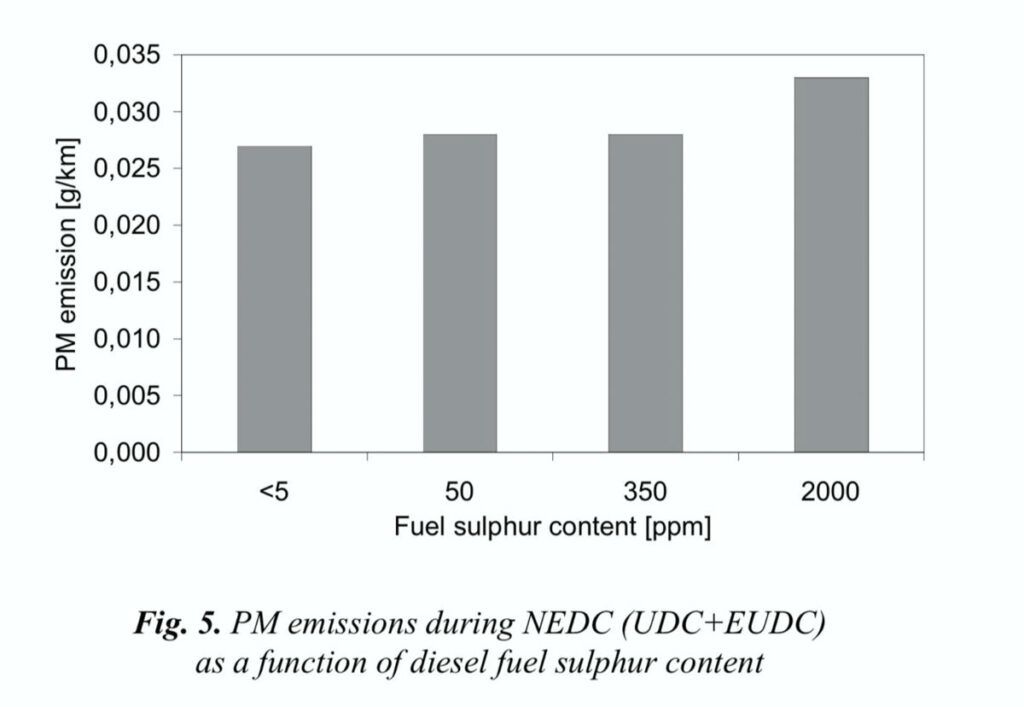
The reduction of sulfur in diesel to ultra-low levels (ULSD) in order to reduce particulate matter and NOx emissions has been a global priority that has also been adopted in the region, as standards are gradually updated to equivalents of Euro V or Euro VI.
3.2 Limited technical and monitoring capacities
Implementing ISO 4406 requires:
- Specialized instrumentation to measure particles by size and actual concentration
- Precise sampling protocols
- Accredited laboratories and highly trained technicians
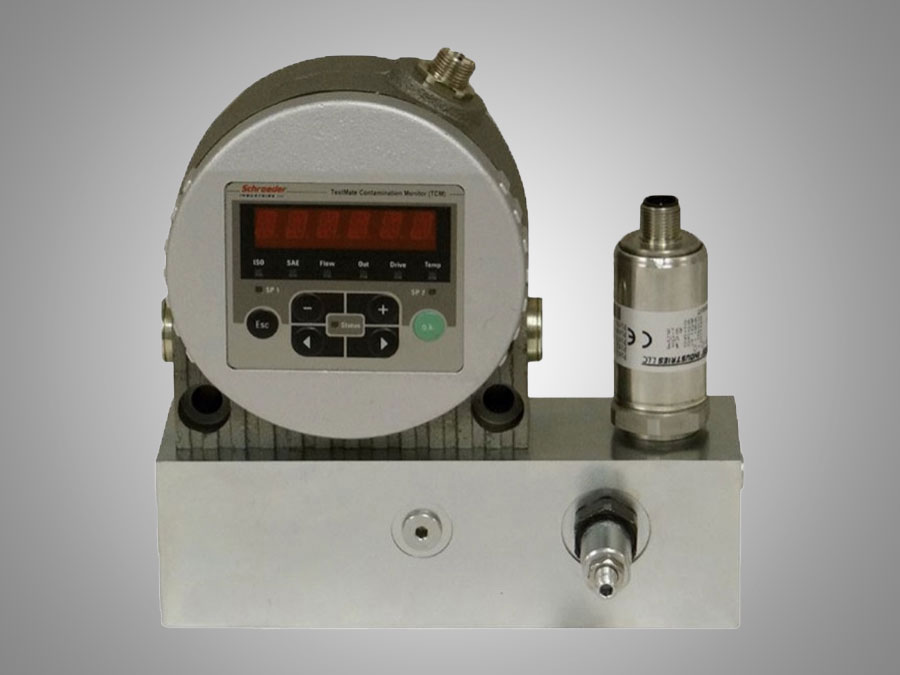
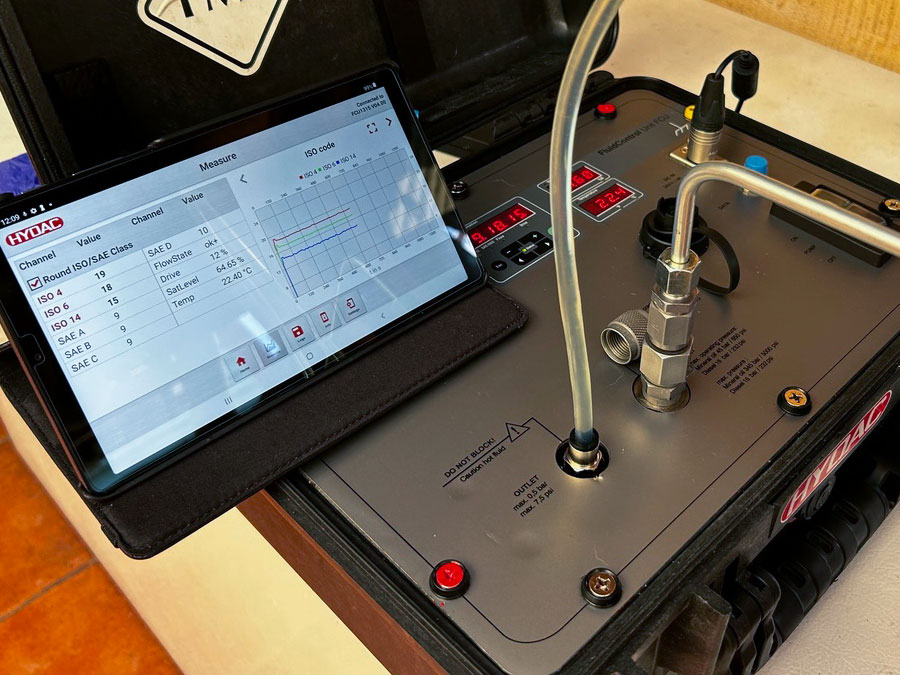
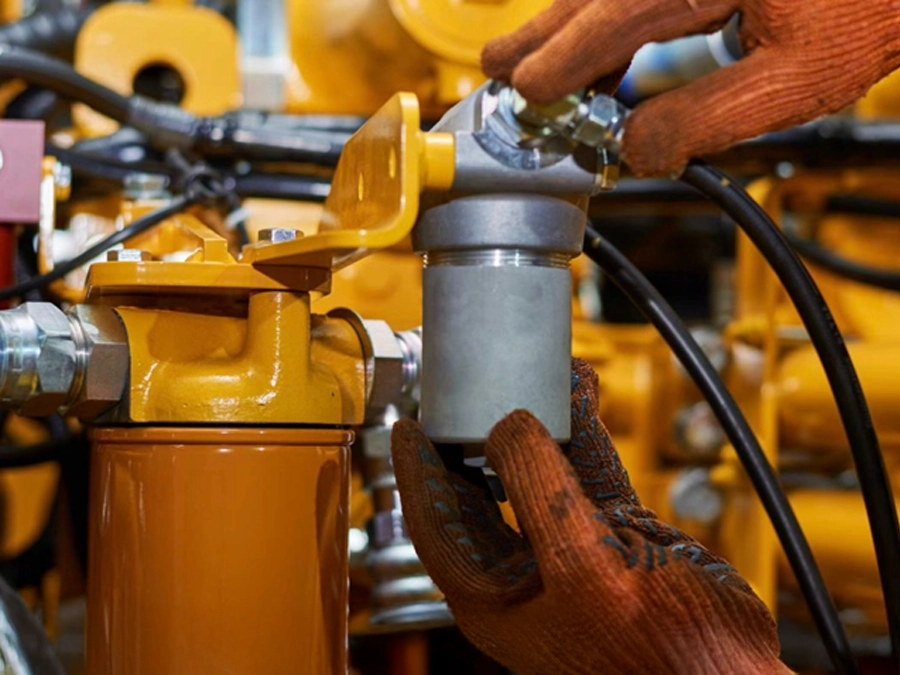
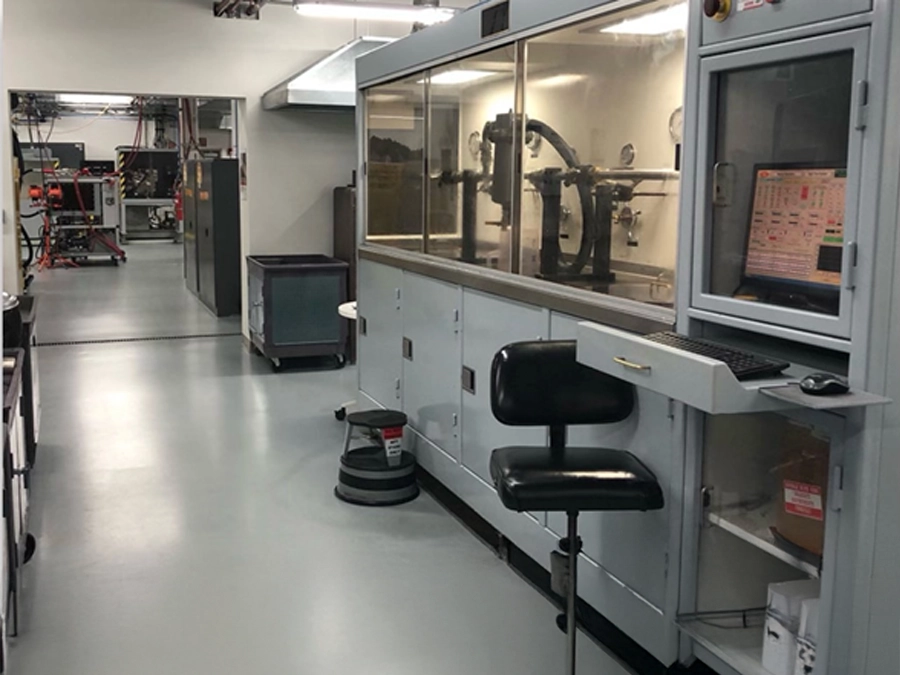
Many countries in the region face technical and financial infrastructure limitations within their metrology systems, which makes it difficult to require and verify cleanliness parameters according to the ISO 4406 standard. This contrasts with measuring standard physicochemical properties such as sulfur or cetane.
This is not a minor factor: although governments can enact regulations, without the capacity to measure and enforce them, compliance becomes largely symbolic.
3.3 Historical regulatory priorities and focus on other quality attributes
Requiring cleanliness levels according to ISO 4406 could imply:
- Improvements in refining and logistics processes
- Greater investments in distribution infrastructure
- Technological changes in fuel production and handling
These investments may be perceived as an economic barrier for countries with fuel markets that are more sensitive to price and competitiveness. As a result, governments tend to prioritize simpler parameters with immediate and visible impact (such as sulfur reduction) rather than more sophisticated measures related to particle cleanliness.
In addition, diesel fuel in several Latin American economies is still sold with relatively high sulfur levels compared to European standards such as Euro VI (for example, in Ecuador, where sulfur levels remain higher than the 10 ppm required under Euro VI).
3.4 Regulatory mechanisms based on standards
Latin American regulations typically reference other global standards, such as:
- ASTM International standards for fuels and lubricants
- API and ACEA standards for oil service categories
However, they do not directly adopt ISO 4406 as a mandatory requirement within fuel or lubricant regulations. This reflects a tendency to integrate requirements from standards that are more commercially widespread or have broader industrial adoption in national markets, rather than more technical standards related specifically to fluid cleanliness.
3.5 Influence and priorities of the industrial sector & OEMs
While engine manufacturers (OEMs) recommend cleanliness levels according to ISO 4406 to ensure the reliability of injection systems and minimize failures, they often do not directly influence national regulations—except in markets with strong pressure to comply with emissions standards or with complex certification systems.
In many countries, the dialogue between governments, the oil industry, and manufacturers has been stronger around emissions parameters or chemical composition than around particle cleanliness, due to factors such as:
- Market pressures
- Industrial compliance costs
- Interests in maintaining the competitiveness of regional fuels
4. Consequences of not requiring ISO 4406
Although ISO 4406 is not mandatory, its absence in regulation implies several important aspects:
- Higher particle contamination in fuels sold in the regional market, with typical cleanliness levels around ISO 22/21/18 or higher—indicating a greater number of particles—which can damage sensitive injection systems and cause premature wear.
- Higher operating and maintenance costs for end users, especially fleets and heavy machinery, due to failures or premature replacement of components.
Indirect environmental impacts, since fuels with higher internal contamination may contribute to increased emissions of fine particles during combustion.
- Environmental contamination
- Acid generator
- Loss of diesel calorific value
- Damage to the injection system
- Loss of power
- Higher fuel consumption
- Generator of chemical reactions/acids
- Higher consumption of conventional filters
- Damage to the injection system
- Poor dosing
- Loss of power
- Higher fuel consumption
- Premature cylinder wear
- Premature loss of compression
- Contaminated oil
- Increased engine wear
- Higher consumption of lubricating oil
5. Recommendations and steps toward the integration
of standards such as ISO 4406 in the region
5.1 Strengthening technical capacities
To evaluate and implement ISO 4406, countries need:
- Accredited laboratories
- Fuel cleanliness monitoring programs
- Technical training for regulatory authorities
5.2 Regional harmonization of regulations
Regional blocs such as Mercosur or the Andean Community can establish minimum quality standards that incorporate ISO 4406 or other advanced methods for fuel contamination control.
5.3 Regulatory incentives
Offering fiscal or market incentives to distributors who sell fuels with cleanliness levels certified according to ISO 4406, without imposing immediate regulatory burdens, can be a transitional strategy.
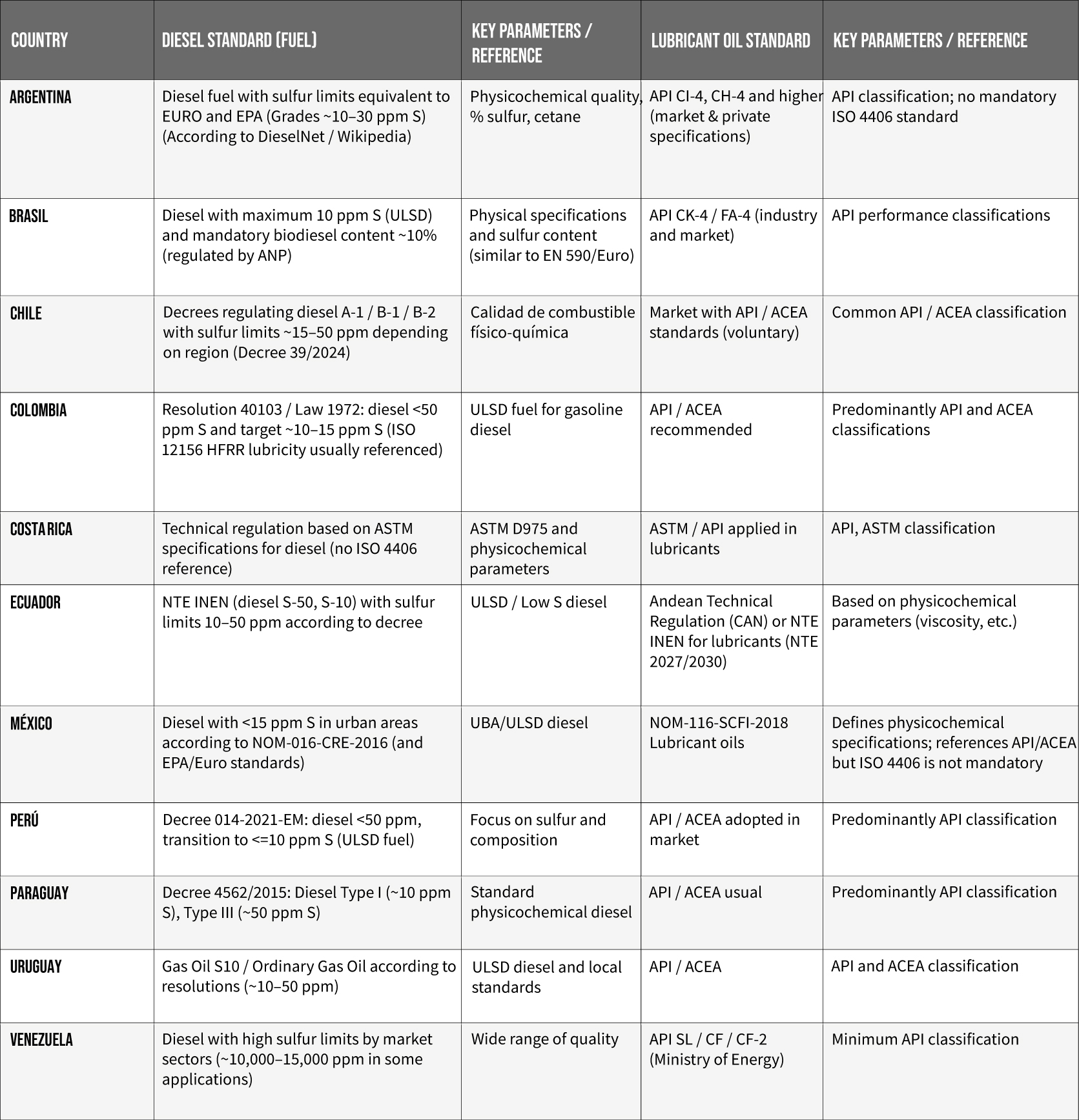
6. Comparison Table – Diesel and Oil Standards by Country (LatAm)
6.1 Key Interpretations of the Table
Regarding Diesel (Fuel)
- Latin American countries primarily regulate physicochemical parameters such as sulfur content, cetane number, density, flash point, and lubricity (HFRR ISO 12156-2 is usually referenced more by OEM manufacturers than by regulatory laws).
- National standards do not incorporate ISO 4406 as a mandatory parameter for diesel; instead, specifications such as ASTM, EN 590, or equivalent sulfur content levels, and simplified lubricity requirements are used.
Regarding Lubricant Oils
- In countries like Mexico, there is a mandatory national standard (NOM-116-SCFI-2018) that regulates physicochemical specifications, test methods, and API/ACEA service classifications for gasoline and diesel engines.
- ISO 4406 is not listed as a mandatory quality requirement in any of these national regulations, although it may be cited internally by manufacturers and private users as a monitoring method.
7. International Technical Specifications
Applied in the Region
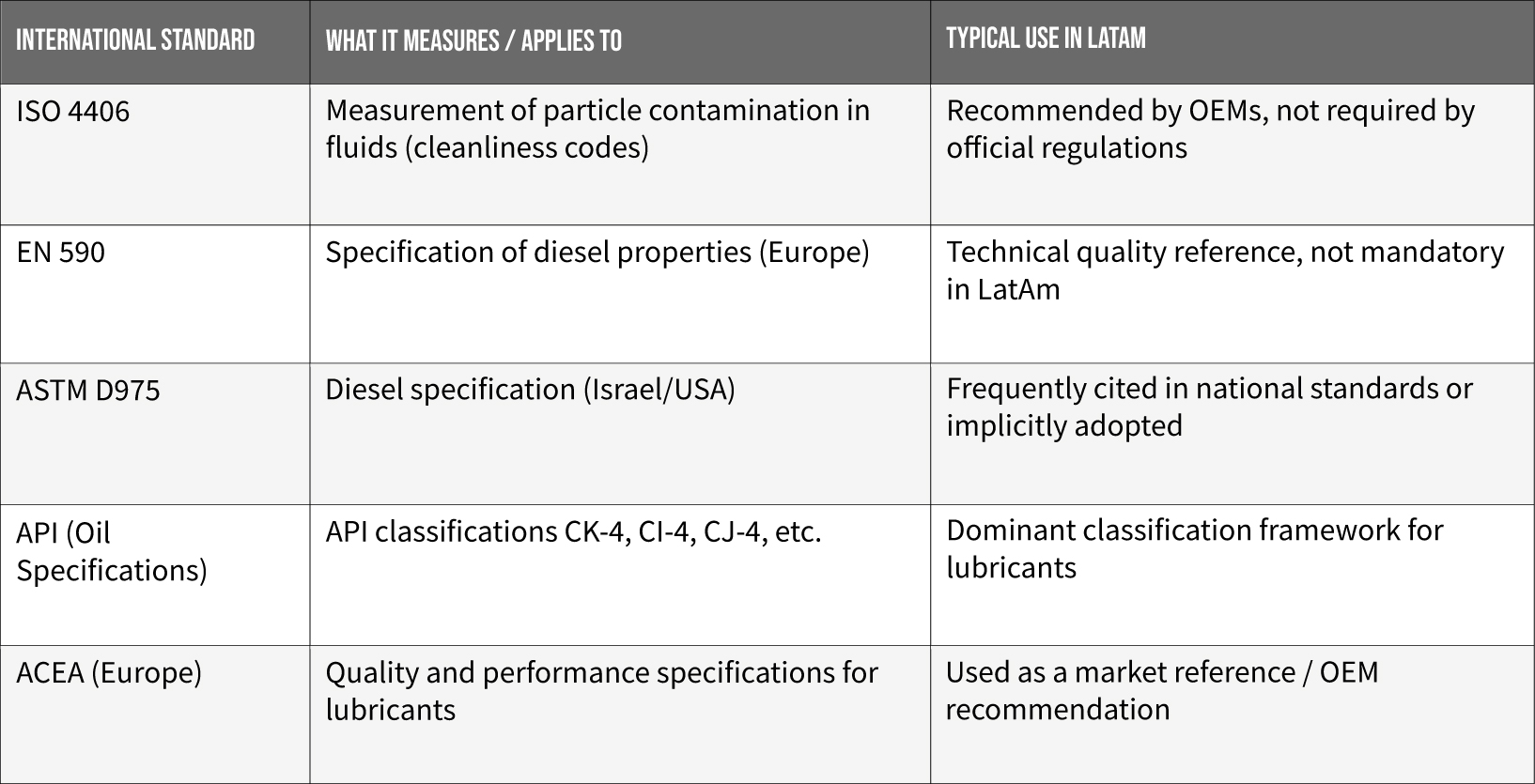
7.1 Most Relevant International Standards (but not mandatory in LATAM)
8. Why is ISO 4406 not formally required
in LatAm standards?
Based on your main interest —exploring why ISO 4406 is not legally required in the region— these points summarize and complement the regulatory reality:
- National fuel and lubricant regulations in LatAm focus on mandatory physicochemical parameters such as sulfur, cetane, viscosity, density, and basic performance properties (according to ASTM/EN/API standards).
Example: Mexico and Peru have sulfur limits (15–50 ppm) for diesel but do not include particle measurements according to ISO 4406. - ISO 4406 is a technical standard for measuring fluid cleanliness, predominantly adopted by equipment manufacturers (OEMs) and industrial sectors that require high reliability standards (e.g., hydraulics and common-rail systems).
Its absence in laws does not mean it is not used commercially: it is used internally by manufacturers, workshops, and fleets to monitor particle contamination. - Regulatory authorities prioritize parameters with direct environmental and safety impacts (sulfur, emissions, lubricity), as these are easier to measure and their effects on emissions and public health are more immediate.
- ISO 4406 requires sophisticated equipment and accredited laboratories, which can represent adoption barriers in countries with variable technical capacity.
- Regional regulations often adopt broader international standards (ASTM, EN, API) before integrating specific particle measurement standards such as ISO 4406.
Conclusion
The absence of a formal requirement for the ISO 4406 standard for diesel and oils in Latin American regulations is not due to a single factor, but rather a convergence of historical regulatory priorities, technical and economic limitations, and regulatory frameworks based on other global standards.
Although ISO 4406 is widely recommended by manufacturers and integrated into international technical frameworks, its implementation as a formal requirement faces real barriers that must be addressed through public policies, technical capacity building, and industry agreements if the goal is to improve fuel quality and extend machinery lifespan in the region.